


Economic Programs & Support Framework
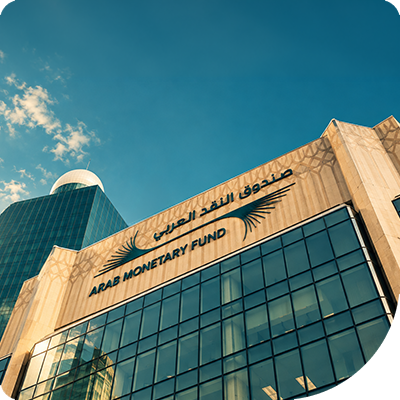
The Arab states established the Arab Monetary Fund (AMF) to lay the monetary foundations for Arab economic integration and accelerate economic development across all Arab countries. The Fund supports economic and financial reform programs that advance national objectives and strengthen efforts towards Arab economic integration. In this context, it provides financing for reform programs in member countries through its lending activity, which ranks foremost among the means available to achieve its objectives. The Fund also supports selected reform programs through technical assistance to help formulate policies and reforms that achieve the intended objectives.
What we do
The Arab Monetary Fund works with member countries to support economic adjustment and reform efforts in areas linked to macroeconomic stability, public finance, the financial and banking sector, trade reform, liquidity needs, and small and medium enterprise development. These programs are designed to help member countries address economic imbalances, strengthen resilience, and enhance the effectiveness of national reform efforts.
How we work
The Arab Monetary Fund’s support is delivered through structured facilities and close consultation with national authorities. This includes assessing economic conditions, agreeing on appropriate policies and measures where required, and monitoring progress during the implementation period. This approach reflects the Arab Monetary Fund’s strategic role as an Effective Lending Provider, supporting stability while aligning financial facilities with reform objectives.

Program Support Framework
The program support framework is based on the Arab Monetary Fund’s mandate to assist member countries in addressing balance of payments disequilibria and supporting economic stability.
The framework includes two main areas:
Balance of Payments Support
Facilities aimed at helping member countries address overall balance of payments deficits and maintain external stability.
Reform-Oriented Facilities
Facilities that support reforms in priority areas within the Arab Monetary Fund’s mandate, including public finance, the financial and banking sector, trade reform, short-term liquidity needs, and the enabling environment for small and medium enterprises.
Loans

Ordinary Loan
The Ordinary Loan is provided to eligible member countries when their financing needs exceed 75 percent of their paid-up subscriptions in convertible currencies. The loan is normally provided up to 100 percent of the member’s paid-up subscription in convertible currencies and may reach a maximum of 175 percent when combined with the Automatic Loan entitlement.
The loan requires agreement with the borrowing member country on a financial adjustment program covering a period of at least one year. The program’s policies and measures aim to restore financial balance and reduce the balance of payments deficit. The Fund monitors implementation, and subsequent disbursements are conditional on satisfactory implementation of the agreed policies and measures, as with all other conditional loans. Each disbursement is repayable within five years from its withdrawal date.

Extended Loan
The Extended Loan is provided to eligible member countries facing persistent balance of payments deficits arising from structural imbalances in their economies. It requires agreement with the member country on an economic adjustment program covering a period of at least two years.
The loan is normally provided up to 175 percent of the member’s paid-up subscription in convertible currencies and may reach a maximum of 250 percent when combined with the Automatic Loan entitlement. Each disbursement is repayable within seven years from its withdrawal date.

Compensatory Loan
The Compensatory Loan assists member countries facing an exceptional balance of payments situation resulting from a decline in export earnings from goods and services and/or a significant increase in agricultural import costs caused by a deterioration in domestic crop production.
The loan has a three-year repayment term and is provided up to a maximum of 100 percent of the member’s paid-up subscription in convertible currencies. Eligibility requires that the decline in exports or the increase in agricultural imports be exceptional and temporary.
Sectoral Loans and Facilities
The second group comprises loans and facilities available to support specific economic sectors. These include the Structural Adjustment Facility for the Financial and Banking Sector, the Structural Adjustment Facility for the Government Finance Sector, the Trade Reform Facility, the Oil Facility, the Short-Term Liquidity Facility, and the Facility for Supporting an Enabling Environment for Small and Medium Enterprises.
Structural Adjustment Facility
The Structural Adjustment Facility was introduced in 1998. Initially, it focused on supporting reforms undertaken by borrowing member countries in the financial and banking sector. In 2005, its scope was expanded to include support for public finance reforms.
To qualify, the borrowing member country must have initiated structural reform efforts and achieved a reasonable degree of macroeconomic stability. The facility is granted following agreement on a structural reform program whose implementation is monitored by the Fund.
Each component of the facility—the financial and banking sector component and the government finance component—is provided up to a maximum of 175 percent of the member’s paid-up subscription in convertible currencies. Financing under the facility is disbursed in two installments, each repayable over four years from its withdrawal date.
Facilities

Structural Adjustment Facility
The facility was introduced in 1998, initially focusing on reforms undertaken by borrowing member countries in the financial and banking sector. In 2005, its scope was expanded to include support for public finance reforms.
To qualify, the borrowing member country must have initiated structural reforms and achieved a reasonable degree of macroeconomic stability. The facility is granted following agreement on a structural reform program whose implementation is monitored by the Fund.
Each component of the facility—the financial and banking sector component and the public finance component—is provided up to a maximum of 175 percent of the member’s paid-up subscription in convertible currencies. Financing under the facility is disbursed in two installments, each repayable over four years from its withdrawal date.
Trade Reform Facility
The Fund’s Board of Governors approved the facility in 2007 to support member countries in addressing the burdens that may arise from trade reform policies and measures. It also encourages countries to adopt the reforms needed to enhance their ability to benefit from loans available in international markets, with a view to promoting growth and creating productive employment opportunities.
The facility provides financing up to a maximum of 175 percent of the member’s paid-up subscription in convertible currencies, following agreement on an appropriate structural reform program whose implementation is monitored by the Fund.
The same rules governing the maturity, disbursement, and repayment of the Structural Adjustment Facility for the Financial and Banking Sector and the Public Finance Sector apply to this facility.

Oil Facility
The facility was approved in April 2007 and became operational in December 2008 as a temporary lending mechanism effective for five years from its commencement, pursuant to Board of Governors Resolution No. (3) of 2007.
It aims to support member countries affected by exceptional increases in the prices of imported petroleum products and natural gas that worsen their balance of payments positions, and/or to encourage these countries to implement appropriate reforms that strengthen their ability to withstand external shocks.
Eligible member countries may access financing through simplified and expedited procedures up to a maximum of 100 percent of their paid-up subscriptions in convertible currencies, without agreeing on a reform program with the Fund. Alternatively, financing may reach a maximum of 200 percent of the subscription following agreement to implement a reform program supported by one of the Fund’s regular loans or facilities dedicated to reform programs.

Short-Term Liquidity Facility
The Fund’s Board of Governors approved the facility in 2009 to help member countries that have made progress in economic and structural reforms address temporary liquidity difficulties resulting from developments in global financial markets.
Loans under the facility are provided through expedited procedures without requiring the eligible member country to agree on a reform program. Financing is available up to a maximum of 100 percent of the member’s paid-up subscription in convertible currencies.
The facility may be withdrawn in a single disbursement or in installments, according to the borrowing member country’s preference. Each disbursement is repayable six months after its withdrawal date, with the possibility of extending the maturity for the same period up to two times.

SME Conducive Environment Support Facility
The Fund introduced the facility in 2016 to support government reforms aimed at creating an enabling environment for small and medium enterprises in member countries, helping them create employment opportunities and promote inclusive and sustainable growth.
Loans under the facility are provided up to 100 percent of the member’s paid-up subscription in convertible currencies. Each disbursement is repayable over four years from its withdrawal date.
Impact

Supporting macroeconomic stability
Enhancing economic and financial stability across member countries.

Addressing balance of payments pressures
Helping finance member countries’ balance of payments deficits and address their underlying causes.

Strengthening economic resilience
Supporting member countries in responding to external shocks and economic challenges.

Supporting reform implementation
Helping member countries implement economic and financial reform policies and measures.

Enhancing financial and institutional sustainability
Supporting the development of financial frameworks and improving institutional efficiency.

Supporting long-term and inclusive economic development.
Advancing economic development and promoting inclusive and sustainable growth across member countries.